
“Temple of Love (1992)” doesn’t just update a classic — it amplifies it. The drums thunder, the guitars slice through the mix, and Andrew Eldritch delivers one of his most commanding vocals. Then Ofra Haza enters, her voice rising like a prayer over the chaos, and suddenly the whole track feels mythic. It’s darker, heavier, and far more cinematic than the 1983 original — a full‑scale reinvention.
Released in April 1992 to promote the compilation Some Girls Wander by Mistake, the track became the band’s biggest commercial success, reaching number three in the UK and introducing a new generation to the band’s towering sound.
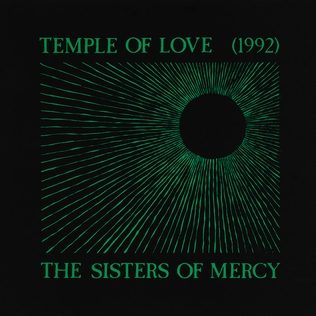
By the early ’90s, The Sisters of Mercy were in a strange place — a band with a massive cult following but no immediate plans for a new studio album. When their early singles were collected for Some Girls Wander by Mistake, Eldritch saw an opportunity to revisit “Temple of Love,” a song that had become a fan favorite but never reached its full potential on the charts. Rather than simply remaster it, he rebuilt it from the ground up.
The masterstroke was bringing in Ofra Haza, the Israeli singer whose ethereal, haunting voice Eldritch admired. Her presence transforms the track, adding a spiritual, almost ceremonial quality that elevates the song from a fierce goth‑rock single into something grander and more timeless. Her vocals were recorded separately in Tel Aviv, but Eldritch has famously stated that her contribution “finished” the song in a way he couldn’t have imagined in 1983.

A sound that feels like a cathedral made of noise
The 1992 version is a wall of sound shaped by Ian Stanley — louder, heavier, and more layered than the original. The guitars are sharper, the drums hit harder, and the production has a widescreen clarity that makes every element feel enormous. It replaced the original’s thin, post-punk production with a massive, industrial-rock soundscape. It utilized a newer version of the band’s “drum machine,” Doktor Avalanche, which was programmed to sound like “thundering” live percussion. Eldritch’s vocal is commanding, but it’s Haza who gives the track its emotional core. Her voice floats above the chaos, turning the song into a kind of gothic lament, equal parts beauty and devastation.
The arrangement stretches past eight minutes, building and collapsing in waves. It’s dramatic without tipping into melodrama, a perfect balance of power and restraint. The full “Extended” version of the track runs for 8:08. Many radio stations played the shorter 3:52 edit.
The lyrics remain unchanged from the 1983 version, but the new production shifts their meaning. Themes of desire, loss, and the dangerous pull of love feel more intense here, as if the stakes have been raised. With Haza’s voice echoing through the mix, the song becomes a kind of dark prayer — a plea for connection in a world that feels cold and unforgiving.
The mood is sweeping and tragic, but also strangely uplifting, as if the song is reaching for transcendence even as it sinks into darkness.
A breakthrough moment that reshaped their legacy
“Temple of Love (1992)” became the band’s highest‑charting single, finally giving them the mainstream recognition that had eluded them in the early ’80s. It charted across Europe and remains one of their most streamed and rediscovered tracks. The track reached No. 2 in the UK It was also was a Top 5 smash in Germany, where it stayed in the charts for over six months. For many listeners, this is the definitive version — the one that captures everything The Sisters of Mercy represent at their most ambitious.
Because it captures the band at their most expansive. It’s a song that feels like a world unto itself — dramatic, emotional, and unapologetically grand. Eldritch’s voice brings the darkness, Haza brings the light, and together they create something that feels both ancient and futuristic. It’s the rare re‑recording that doesn’t just improve on the original but completely redefines it.
For many fans, “Temple of Love (1992)” isn’t just a highlight of The Sisters of Mercy’s catalog — it’s one of the defining gothic rock tracks of the entire era.