
When Michael Jackson released “Black or White” in November 1991, the world was paying attention. After the unprecedented success of Thriller and Bad, every new Jackson release was a major event. Yet “Black or White” was more than just another hit single—it was a bold statement wrapped inside an infectious pop-rock anthem.

Serving as the lead single from the album Dangerous, the song combined a powerful message about racial harmony with a sound designed to reach the widest possible audience. The result was one of the biggest hits of Jackson’s career and one of the most memorable pop releases of the early 1990s.
A Song with a Message
At its core, “Black or White” promotes equality and understanding. The song’s central idea is simple: a person’s race should not determine how they are treated or valued.
While many artists have addressed social issues through music, Jackson chose an approach that was direct, accessible, and optimistic. Rather than focusing solely on conflict, the song emphasizes common humanity and the possibility of bringing people together.
That message helped the track resonate with listeners around the world, regardless of age, culture, or background.
Mixing Genres, Jackson Style
One of the reasons “Black or White” remains so distinctive is its musical versatility. The song blends pop, rock, dance, and elements of hip-hop into a seamless package that feels unmistakably Michael Jackson.
The opening guitar riff immediately grabs attention, while the driving rhythm keeps the energy high throughout. Jackson’s vocal performance moves effortlessly between playful moments and passionate declarations, demonstrating once again why he was one of the most versatile performers of his generation.
Listening to the song today, it’s striking how modern it still sounds despite being more than three decades old.
The Premiere Everyone Talked About
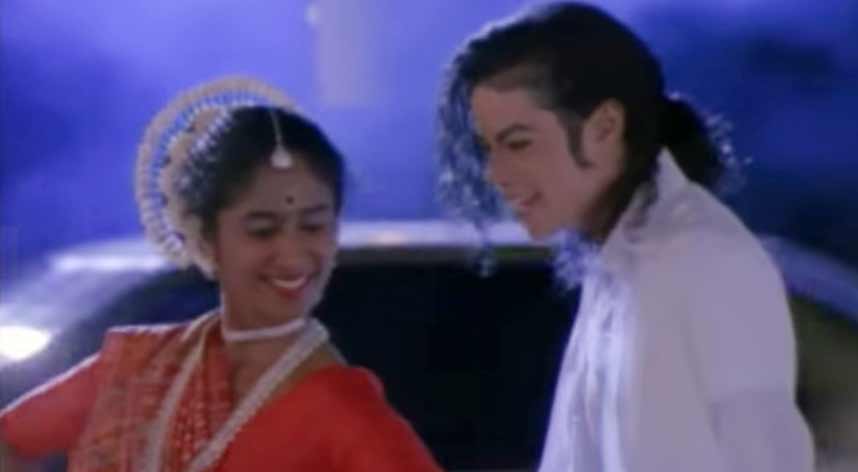
The release of “Black or White” was accompanied by one of the most ambitious music video premieres in history. Broadcast simultaneously in dozens of countries, the short film attracted an enormous television audience and became a global cultural event.
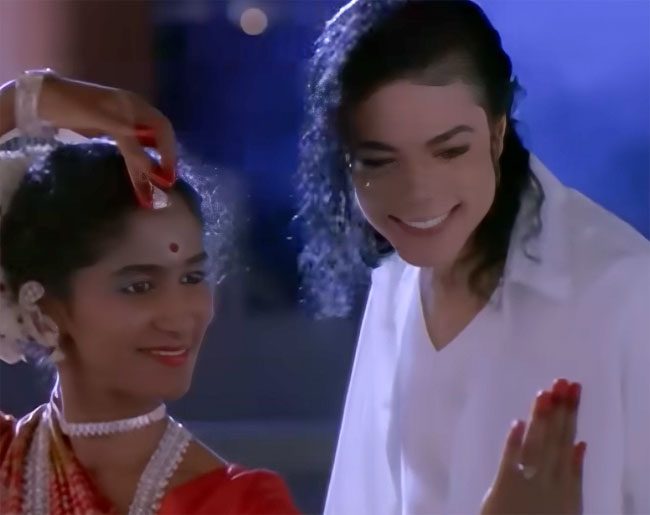
Directed by John Landis, who had previously worked with Jackson on Thriller, the video featured elaborate choreography, visual effects, and appearances from actor Macaulay Culkin and several performers from around the world.
Perhaps its most famous sequence involved faces morphing seamlessly from one person to another—a groundbreaking visual effect at the time. The scene perfectly reinforced the song’s message by highlighting the diversity of humanity while emphasizing shared identity.
A Chart-Topping Success
Commercially, “Black or White” was exactly the kind of blockbuster single fans expected from Michael Jackson. The song reached number one in numerous countries and became one of the fastest-rising chart hits of his career.
Its success helped launch the Dangerous era and proved that Jackson remained a dominant force in popular music even as musical trends were changing in the early 1990s.
For many listeners, the song served as their introduction to a new chapter in Jackson’s artistic journey.
Beyond the Controversy
Although the video generated discussion and controversy due to some of its later scenes, the song itself has largely endured because of its positive message and universal appeal. The last four minutes of the original music video were removed by MTV and other music video TV channels – scroll down for the uncut version.
Over the years, “Black or White” has been embraced as one of Jackson’s most socially conscious recordings. While it may not have the darker themes of songs like “They Don’t Care About Us” or “Earth Song,” it remains one of his clearest expressions of hope and inclusivity.
That balance between entertainment and meaning is part of what makes the track so memorable.
“Black or White” continues to feel relevant. Its message of acceptance and equality remains as important as ever, while its energetic production ensures that it never sounds like a lecture. The song also captures Michael Jackson at a fascinating point in his career—still capable of dominating the charts, but increasingly interested in addressing larger social themes through his music.
In the end, “Black or White” succeeds because it combines a meaningful message with a great pop song. It makes listeners think, but it also makes them want to sing along. That’s a difficult balance to achieve, and it’s one of the reasons the track remains a standout in Michael Jackson’s remarkable catalogue.