
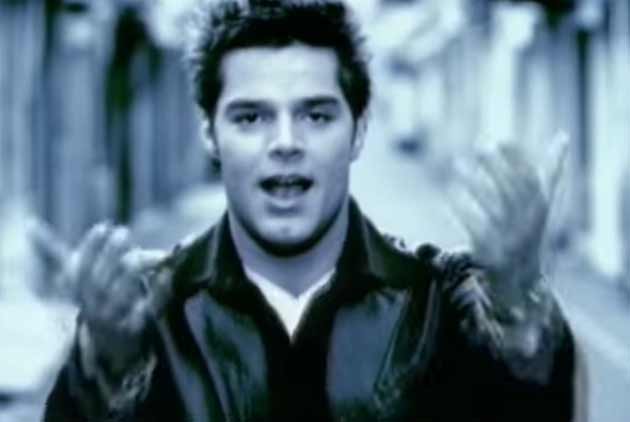
Released in 1995 on Ricky Martin’s album A Medio Vivir, the song marked a turning point in his career, pushing him from telenovela‑famous heartthrob to full‑blown international pop force. From the first shout of “Un, dos, tres…,” you know you’re in for something bold, bright, and impossible to sit still through.
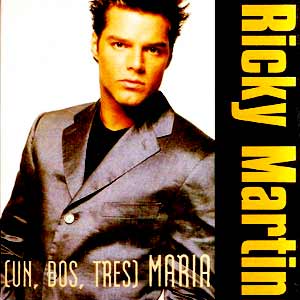
A production built on tropical rhythm and pop precision
The track blends Latin pop, dance, and Caribbean influences into a sound that feels both traditional and modern. The percussion drives everything forward, the horns add flashes of color, and the chorus lands with the kind of melodic punch that sticks for days. Producer K. C. Porter gives the song a glossy, international sheen without sanding off its cultural roots. It’s a perfect balance — energetic, infectious, and unmistakably Ricky Martin.
“María” is playful from top to bottom. The lyrics paint a picture of a woman who’s irresistible, intoxicating, and maybe a little dangerous — the kind of character who shows up in a song and instantly takes over the room. It’s not meant to be dissected; it’s meant to be felt. The repetition, the rhythm, the call‑and‑response phrasing — everything is designed to pull you into the groove.
Ricky Martin delivers the song with total commitment. His voice rides the rhythm with ease, switching between smooth phrasing and bursts of high‑energy ad‑libs that push the track into overdrive. There’s a joy in his delivery — a sense that he knows exactly how fun the song is and wants you to feel it too.
A video that amplified the song’s global appeal
The first videos for the original track and the Pablo Flores remix were shot in La Boca in Buenos Aires, with Ricky dancing through the neighborhood’s colorful tenements in a loose white shirt and blonde‑streaked hair. After the song exploded in France, a new version was filmed in Paris, directed by Memo del Bosque, showing Martin wandering from Montmartre to the Champs‑Élysées, counting “un, dos, tres” on his fingers and flirting his way through the city. Spanish model Laura Cisneros appears as María, while Ricky dances, charms strangers, and even throws himself onto a car hood with full telenovela flair. This Paris cut became the widely known version, later racking up over 175 million YouTube views.
A fourth video, made for the English‑language release and shown in places like Australia, placed Martin in a series of stylized indoor sets — white suits, multicolored walls, fluffy textures — surrounded by dancers and models in surreal, fashion‑editorial looks. It isn’t available on YouTube due to copyright restrictions but survives on the Greatest Hits: Souvenir Edition DVD.

A chart run that lit the fuse for Ricky Martin’s crossover moment
“María” became a massive hit across Latin America and Europe, climbing charts in countries where Spanish‑language pop rarely broke through at the time. It reached the Top 10 in multiple European markets and became one of the defining Latin pop singles of the mid‑’90s. The song’s success laid the groundwork for Martin’s later global explosion with “Livin’ la Vida Loca,” but “María” is where the fuse was lit.
It’s a celebration, a flirtation, a burst of rhythm that refuses to age. The production still pops, the chorus still hits, and Ricky Martin’s performance still radiates charisma. It’s the kind of song that turns any room into a dance floor — a reminder of how powerful a simple, joyful groove can be.