
In 1992, R.E.M. did something bold. With Automatic for the People, they didn’t just strengthen their place as indie icons — they shifted into something bigger: cultural commentators with a sharpened lens. Leading off that moody masterpiece was “Drive” — an eerie, enigmatic anthem that ditched jangle-pop and hand claps for shadows, strings, and simmering rebellion.

This wasn’t just a new single. It was a signal. And it hit like a slow-moving storm.
A Sonic Shift: Moody, Minimal, Monumental
“Drive” doesn’t open — it emerges, hushed and haunting. A slow, acoustic guitar riff drifts in, joined by subtle, sweeping strings arranged by none other than John Paul Jones of Led Zeppelin. From that first melancholic chord, it’s clear: this isn’t the sunny R.E.M. of “Stand” or “Shiny Happy People.” This is mood music for uncertain times.
Instead of a loud chorus or a guitar solo, we get a slow-burn arrangement that builds tension with cello, ambient textures, and silence that almost says more than the music. It’s cinematic without being grandiose — a protest in a whisper rather than a scream. While grunge was exploding on every FM dial, R.E.M. pulled a left turn and gave us something far more contemplative.
Cryptic Words, Clear Emotion
Lyrically, “Drive” doesn’t lay it all out — it asks you to meet it halfway. Michael Stipe’s murmured “Hey, kids, rock and roll / Nobody tells you where to go, baby” isn’t just a throwaway line. It’s a challenge. A dare. A shrug and a warning wrapped in one.
Stipe later revealed the song was sparked by concerns over rising conservatism among young Americans. But it’s not a sermon — it’s a mirror. The “drive” in the title isn’t about highways. It’s about agency. Control. Who’s steering your life — and why? Is it rebellion, or just drifting in disguise?
Depending on who’s listening, the track might sound like generational disillusionment, a meditation on mortality, or just the ache of growing up in a world that doesn’t make sense. That’s the magic — it feels personal, even when it’s vague.
A Video That Surfaces and Sinks
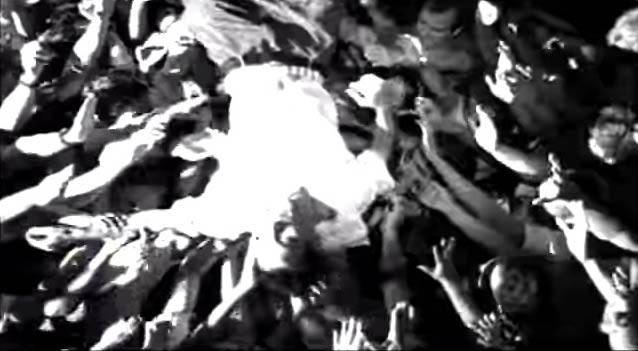
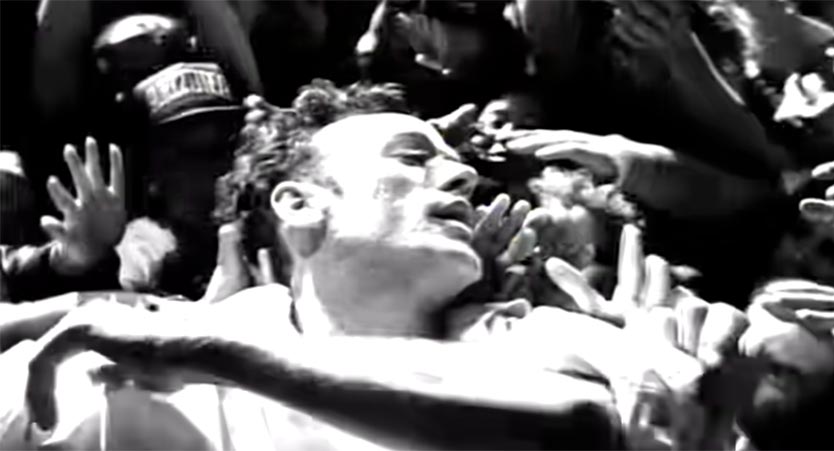
Directed by Peter Care and shot at the Sepulveda Dam in Los Angeles, its accompanying music video perfectly captures the moody intensity of early-90s alternative rock. Filmed in stark, high-contrast black and white with dramatic strobe lighting, the mesmerizing visual centers on a bare-chested Michael Stipe endlessly crowdsurfing over a sea of a thousand extras. This creates an ambiguous, claustrophobic tension where he looks to be either revered by the fans or on the verge of being devoured by the mob. Interestingly, the intense two-night shoot featured some legendary off-camera drama as well, with actor River Phoenix and director Oliver Stone allegedly getting into a fistfight right inside Stipe’s trailer!
Not a Hit — a Marker
Commercially, “Drive” wasn’t a blockbuster. It peaked at No. 28 on the Billboard Hot 100, though it claimed the top of the Modern Rock Tracks chart. But calling it a sleeper hit would miss the point. It was never meant to dominate pop radio — it was meant to clear space.
As the opening track for Automatic for the People, it set the stage for an album that critics now routinely call one of the best of the ’90s. R.E.M. was reinventing themselves — trading major chords for minor key meditation, and bright college rock for emotional chiaroscuro.
Live, “Drive” only got more intense. R.E.M. often extended the song into sprawling, hypnotic versions that melted the edges of melody and stretched its slow burn into something epic.
Still Driving, Decades Later
“Drive” may not be the first song you think of when you think R.E.M. It’s not their catchiest. But it just might be their bravest. It abandoned safety and shot straight for the gut — no big hook, no easy answers, just a sense of unease that still feels eerily timely.
Over 30 years later, “Drive” still asks the same question it always did: Who’s really in control? And it does it without yelling. That’s what makes it resonate — it’s quiet thunder. It doesn’t chase the listener. It lets the listener come to it.
And once you do, it doesn’t let go.