

Released in 1995 as the lead single from Michael Jackson’s HIStory: Past, Present and Future, Book I, the track is a rare moment where Michael and Janet share the spotlight, their voices locked together in frustration, defiance, and razor‑sharp rhythm. It’s a song born from scrutiny and exhaustion, but delivered with the precision of two artists who know exactly how to turn emotion into performance.
The track is a collision of sharp beats, metallic textures, and tight funk undercurrents. Producers Jimmy Jam and Terry Lewis give the song a futuristic edge — clipped percussion, digital stabs, and a groove that feels like it’s pacing the floor. Michael and Janet weave in and out of each other’s lines, sometimes harmonizing, sometimes sparring, always pushing the energy higher. The whole thing feels like a controlled explosion, the sound of two siblings refusing to be quiet.
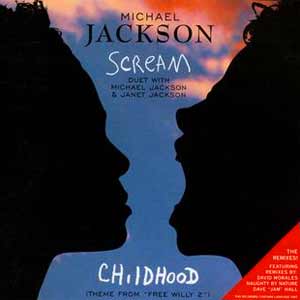
Lyrics that channel frustration into rhythm
“Scream” is one of Michael’s most direct songs — a response to media pressure, public judgment, and the emotional toll of constant scrutiny. Janet’s presence sharpens the message; she’s not just backing him up, she’s standing beside him, echoing the anger and amplifying the solidarity. The writing is rhythmic and percussive, almost like spoken‑word set to a beat, which makes every line land with extra force.
Michael’s voice is taut, urgent, and full of bite, while Janet brings a cool, controlled intensity that balances the track. Together, they create a dynamic that’s both explosive and deeply human. You can hear the frustration, but you can also hear the relief — the catharsis of finally saying the quiet part out loud.
A video that turned anger into a futuristic art piece
The music video for “Scream,” directed by Mark Romanek, is a monochrome sci‑fi spectacle — sleek, stylized, and meticulously designed. Michael and Janet appear aboard a pristine spacecraft, a symbolic escape from the noise and pressure that inspired the song. The black‑and‑white palette gives everything a hyper‑modern sheen, turning their movements into something almost sculptural.
For the Bayside Boys–style remix videos you’ve worked with before, this one has its own story: Romanek’s version stars the siblings in a series of geometric sets, sharp lighting, and choreography that feels like a release of pent‑up energy. The dance sequences are tight and explosive, the sets are impossibly clean, and the chemistry between Michael and Janet is electric. It’s a visual statement as bold as the song — a cinematic exhale from two artists pushing back against the world.
A chart run that reaffirmed their cultural force
“Scream” debuted to massive anticipation and quickly became one of the biggest pop events of 1995. It reached the Top 5 on the Billboard Hot 100, earned critical acclaim, and became a staple of MTV rotation. The collaboration itself was a headline — two of the most influential siblings in pop history joining forces at a moment when the world was watching Michael more closely than ever.
The song won the 1996 Grammy for Best Music Video, Short Form, and a record-breaking three MTV Video Music Awards (Best Dance Video, Best Choreography, and Best Art Direction).
“Scream” endures because it captures something rare: the moment when two global superstars drop the mask and let the frustration show. It’s bold, stylish, and emotionally charged, but it’s also deeply human. Michael and Janet turned anger into art, pressure into rhythm, and sibling solidarity into one of the most striking pop statements of the ’90s.
Michael Jackson – 80’s music videos >>>.