


Some songs announce themselves with volume; others with attitude. “Gypsy Woman (She’s Homeless)” does it with a keyboard riff so simple and hypnotic that you recognize it within seconds. It loops, it shimmers, it pulls you in — and before you know it, Crystal Waters is gliding over the beat with that cool, unmistakable voice. Released in 1991, the track became one of the defining house singles of the decade, a song that felt both effortless and quietly radical.
A dance‑floor anthem built on empathy
What makes “Gypsy Woman” so striking is the contrast at its core. The beat is warm, the groove is irresistible, and the melody is pure early‑’90s house bliss — but the lyrics tell a different story. Waters sings about a homeless woman who still finds dignity in the small rituals of her day, a character inspired by real people she saw in Washington, D.C. It’s rare for a club track to carry that kind of social awareness, and rarer still for it to do so without preaching.
Waters doesn’t judge; she observes. And that’s what gives the song its quiet power.
A production that loops, pulses, and never lets go
The track’s signature riff — that bright, circling keyboard line — is the anchor of everything. It repeats like a mantra, creating a kind of hypnotic tension that the beat and bassline ride perfectly. There’s a sparseness to the arrangement that makes every element count. When Waters sings “la da dee, la da da,” it’s not filler; it becomes part of the rhythm, part of the spell the song casts.
The Basement Boys (Neal Conway and Teddy Douglas) produced the track with a stripped-back, hypnotic feel using a Korg M1 keyboard for that signature organ riff. The “scat” refrain was so catchy they decided to keep it as the center of the song. It’s minimalism used with absolute confidence.
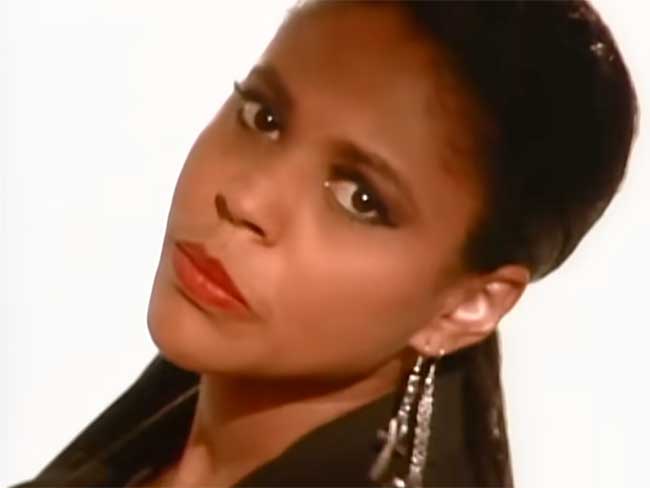
Lyrics that say more than they seem
Waters’ writing is deceptively simple. She sketches the woman’s life in a few lines — the clothes, the makeup, the way she moves through the world — and leaves the listener to fill in the rest. The repetition mirrors the monotony of survival, but the melody gives it warmth. It’s a portrait painted with empathy, not pity.
And that’s why it lands.
A global hit that reshaped what house music could be
“Gypsy Woman” became a massive international success, reaching the Top 10 across Europe and the US. It was a No. 1 hit in Belgium, Italy, the Netherlands, Spain, and Switzerland (and on Eurochart Hot 100), proving that the “La Da Dee” hook was a universal language that translated across every border. It helped bring house music further into the mainstream, but it also expanded what a dance track could talk about. Waters wasn’t just making club music; she was telling stories, giving voice to people who rarely appeared in pop songs.
It was bold, and it paid off.
Decades later, the song hasn’t lost an ounce of its pull. The riff still hooks you instantly, Waters’ voice still sounds cool and assured, and the message still resonates. It’s a reminder that dance music can be joyful and thoughtful at the same time — that a beat can carry meaning without losing its groove.