
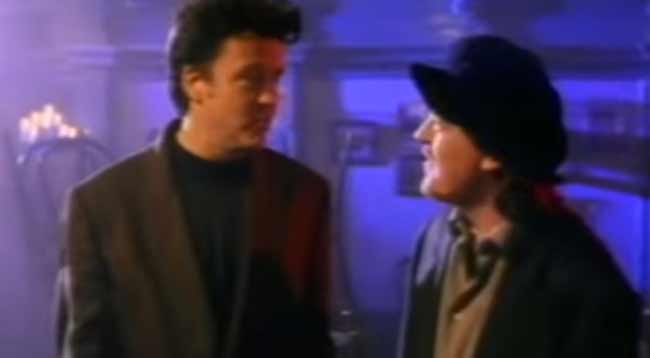
When “Senza una donna (Without a Woman)” resurfaced in 1991 as a duet between Italian blues icon Zucchero and British soul singer Paul Young, it suddenly became something bigger than either artist expected. The original solo Italian version from Zucchero’s breakthrough album Blue’s was already beloved, but the duet transformed it into a worldwide moment — a song that feels like two men quietly admitting how lost they are without the person they love. It’s tender, smoky, and full of that bittersweet ache that makes a ballad linger long after it ends.
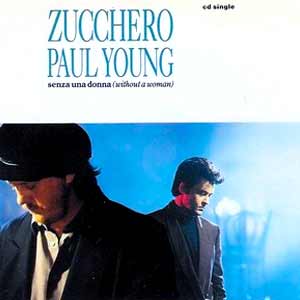
Zucchero had long been blending blues, soul, and Italian songwriting in a way that felt both earthy and elegant. Paul Young, meanwhile, brought a smooth, distinctly British soulfulness. Together, they created a version of the song that felt universal. The English‑language adaptation didn’t dilute the emotion — it amplified it. Their voices complement each other beautifully: Zucchero’s rough, lived‑in tone grounding Paul Young’s warm, velvety delivery. It’s the kind of duet that feels like a conversation between two hearts trying to make sense of the same pain.
The sound: bluesy warmth, gentle groove, and a melody built for late‑night reflection
The production is understated but rich. Acoustic guitars, soft percussion, and a warm, blues‑infused arrangement create a cozy, late‑night atmosphere. Nothing is rushed. Nothing is overproduced. The song breathes. The melody flows with a natural ease, giving both singers space to lean into the emotion without ever overselling it. It’s the kind of track that feels like it was made for dim lights, quiet rooms, and long thoughts.
“Senza una donna” is a song about absence — about realizing how empty life feels without the person who once filled it. The lyrics are simple, direct, and deeply human. There’s no anger, no blame, just a quiet acknowledgment of loneliness and longing. The mood is reflective, soulful, and tinged with hope. Even in its sadness, the song carries a warmth that makes it comforting rather than heavy.
While Zucchero wrote the Italian original, the English adaptation was crafted by Frank Musker, who also wrote hits for Air Supply and Queen. He managed to translate the “absence” and “loneliness” of the original without losing the poetic flow of the Italian vowels.
Chart performance and reception
The duet became a major international hit, reaching No. 1 on Eurochart Hot 100 and the Top 3 in numerous European countries, and becoming one of the most recognizable songs of both artists’ careers. It introduced Zucchero to a global audience and gave Paul Young another signature moment in the early ’90s. Over time, it’s become one of those songs that people return to — a staple of nostalgic playlists, soft‑rock radio, and anyone’s personal soundtrack for quiet, emotional evenings.
“Senza una donna” was released along with two music videos: one for the solo version and another for the duet version.
“Senza una donna” endures because it captures a universal feeling — the ache of missing someone and the quiet strength it takes to admit it. The melody still feels timeless, the vocals still blend beautifully, and the emotion still lands with the same gentle force it had in the early ’90s. It’s one of those rare cross‑cultural duets that doesn’t feel manufactured; it feels lived‑in, honest, and real.